The Small Structural Clues that Can Predict a Bigger Problem
A tree can look healthy from the ground while carrying branches with weak structural attachments. In Peoria, where intense heat and monsoon winds can place additional stress on mature trees, professional tree trimming can involve much more than cutting back overgrown limbs. Professionals of tree trimming in Peoria AZ evaluate branch unions, included bark, cracks, decay, competing stems and other structural clues that may increase the chance of limb failure.
Tree trimming professionals evaluate branch unions for included bark, narrow or weak attachment angles, cracks, decay, cavities, excessive weight and competing stems. These characteristics can concentrate mechanical stress at the attachment point, making a limb more vulnerable during wind, storms or normal loading.
A closer assessment also considers how a branch has developed in relation to the rest of the crown. A limb with poor attachment may carry uneven weight, develop excessive end weight or compete with another stem for space and light. These conditions can change how forces move through the tree as branches sway.
Some Attachment Warning Signs Arborists Look for Before Making a Cut
Professional tree trimming isn’t simply about identifying branches that are too long. The attachment itself can reveal whether a limb deserves closer inspection. A narrow branch angle, for example, may create a different structural situation from a broad union with strong connective wood.
The surrounding canopy matters, too. Does one branch carry substantially more weight than neighboring limbs? Is a co-dominant stem competing with the main leader? Are there signs that previous trimming and pruning changed the tree’s natural structure? These questions help an arborist understand the whole tree rather than treating one branch as an isolated problem.
For Chips Tree Service, this type of evaluation fits within broader residential tree care and professional tree service work. The company identifies itself as a family-owned and operated Phoenix-area tree care provider and has certified arborists on its team.
Why Clean Trimming is about Structure, Not Just Appearance
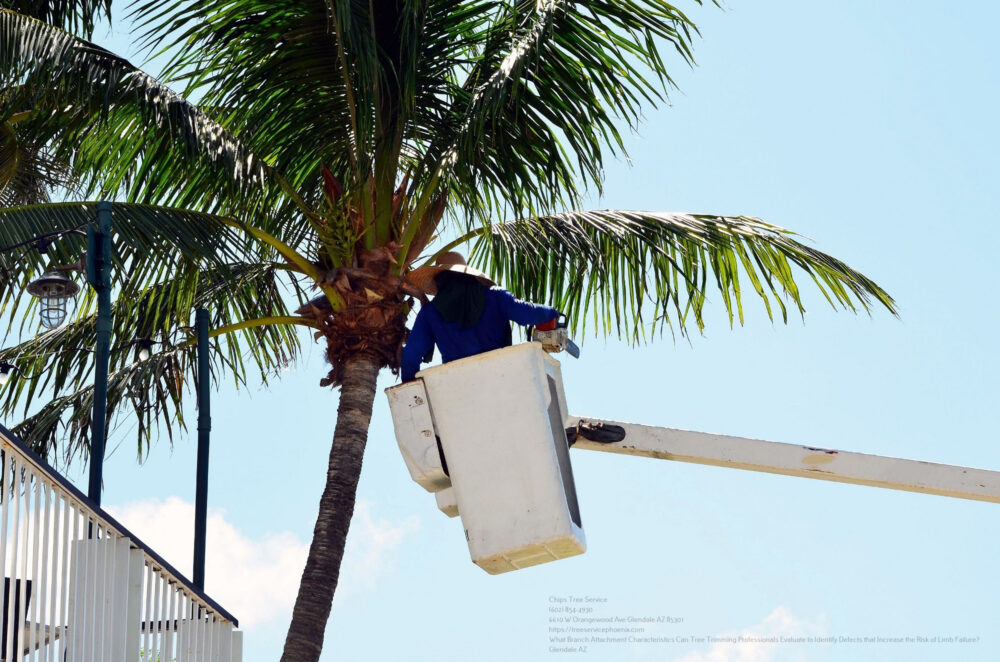
Good tree trimming should support the tree’s structure rather than simply making the canopy look smaller. A professional may remove dead, damaged or poorly positioned tree branches while preserving useful foliage and maintaining an appropriate crown shape.
This distinction matters because excessive or poorly positioned cuts can create new problems. ANSI A300 is designed to provide recognized standards for tree care operations and specifications, including pruning practices. ISA Certified Arborists also note that the current consolidated standards cover pruning, soil management, supplemental support systems and tree risk assessment.
Scheduled tree trimming can therefore be part of a longer-term canopy management plan. Instead of waiting for a visibly dangerous limb, property owners can have mature trees evaluated periodically, particularly before periods of severe weather. This approach can also identify developing tree disease, insect damage or structural changes before they become larger concerns.
Need Professional Tree Trimming?
Contact Chips Tree Service today for expert tree care and a free evaluation.
What Changes When Power Lines Or Buildings Are Nearby?
A structurally questionable branch becomes a more urgent concern when its potential drop zone includes a roof, driveway, pedestrian area, vehicle or power lines. Arborists therefore consider both the likelihood of failure and the consequences if failure occurs.
This is where Drop Zone planning becomes important. Before tree climbing or cutting begins, professionals can evaluate where branches may move or fall and what could be damaged. Safe removals and trimming near structures require careful positioning, appropriate equipment and attention to accepted safety practices, including ANSI Z133 safety standards.
Homeowners shouldn’t assume that a branch is safe simply because it hasn’t fallen before. Trees can change over time. A developing crack, progressive decay or increasing branch weight may alter the risk profile even when the tree appeared stable during an earlier inspection.
When Does Pruning Help More Than Removal?
Not every defective attachment leads to tree removal. If a branch has adequate remaining structure and the concern can be addressed through selective tree pruning, an arborist may recommend targeted work rather than removing the entire tree. The objective is to manage risk while maintaining as much healthy structure as reasonably possible.
However, some situations are more serious. Extensive decay, severe cracks, major structural defects or a compromised attachment over a high-consequence target may make removal the more appropriate option. Tree removal services should be based on the tree’s condition, location and risk rather than simply its age or appearance.
For trees with serious defects after a storm, an emergency tree service may also be appropriate. Chips Tree Service states that it provides emergency tree services and serves properties throughout the Phoenix metropolitan area.
How Tree Trimming Professionals Read a Weak Union
A professional inspection often starts with the branch collar and the shape of the union. The branch collar is the area where the branch connects with the trunk or parent branch, and its development can provide useful information about how the tree has formed the attachment. A trained arborist considers the size, angle and condition of the union rather than assuming that every unusual shape is hazardous.
The presence of included bark can be especially important. When bark is enclosed between stems, the union may not have the same structural characteristics as a strong, open attachment. This becomes more concerning when the union also has cracks, decay or significant leverage from a heavy canopy.
Species also influence the evaluation. A mature palo verde, palm tree or ornamental species may have different growth habits and structural characteristics. Soil conditions, irrigation, previous injuries and environmental stress can also affect tree health. That’s why a good tree health assessment considers both visible branch defects and the conditions surrounding the tree.
What a Professional Evaluation Can Reveal Before the Next Storm
A detailed inspection can uncover issues that aren’t obvious from the ground. Depending on the tree and site, an arborist may examine branch unions, trunk condition, canopy density, deadwood, previous pruning wounds, pest activity and signs of decay. The evaluation may also consider species, age, soil conditions and the tree’s relationship to surrounding structures.
Chips Tree Service highlights local knowledge of Peoria’s climate, monsoon storms and native tree species on its Peoria service page. The company also lists ISA Certified Arborists, professional equipment, safety-focused practices and a free tree evaluation among its service credentials.
For homeowners, the practical benefit is better information. Instead of guessing whether a large limb needs cutting, they can understand what defect is present, what could happen if it worsens and whether trimming, support, monitoring or removal is appropriate. That makes tree care more deliberate and less reactive.
Why Choosing Chips Tree Service is a Smart Choice
Branch attachment defects aren’t always dramatic. Sometimes the warning sign is a narrow union, included bark, a developing crack or a limb carrying more weight than its structure can comfortably support. Professional tree care looks beyond surface appearance to understand how the tree is built, how it has changed and what conditions could increase the chance of failure.
Chips Tree Service combines certified arborist knowledge with local experience serving Phoenix-area properties and surrounding Valley cities. Its team provides tree trimming, tree removal and broader tree care services, with attention to safety and the challenging conditions found across the region.
If a mature tree has questionable branch attachments, a professional assessment can help determine whether scheduled trimming, structural support, monitoring or removal makes sense. For property owners concerned about limb safety and long-term tree health, professional tree trimming in Peoria AZ can provide a more informed path forward.
Need Professional Tree Trimming?
Contact Chips Tree Service today for expert tree care and a free evaluation.
FAQs About Tree Trimming in Peoria AZ
Connect With Us
Phone: (602) 854-4930
Location: 6610 W Orangewood Ave Glendale, AZ 85301
Socials: YouTube